
MediaSpurs Featured in SportMarketing.pl on the Rise of Microdrama in Sport
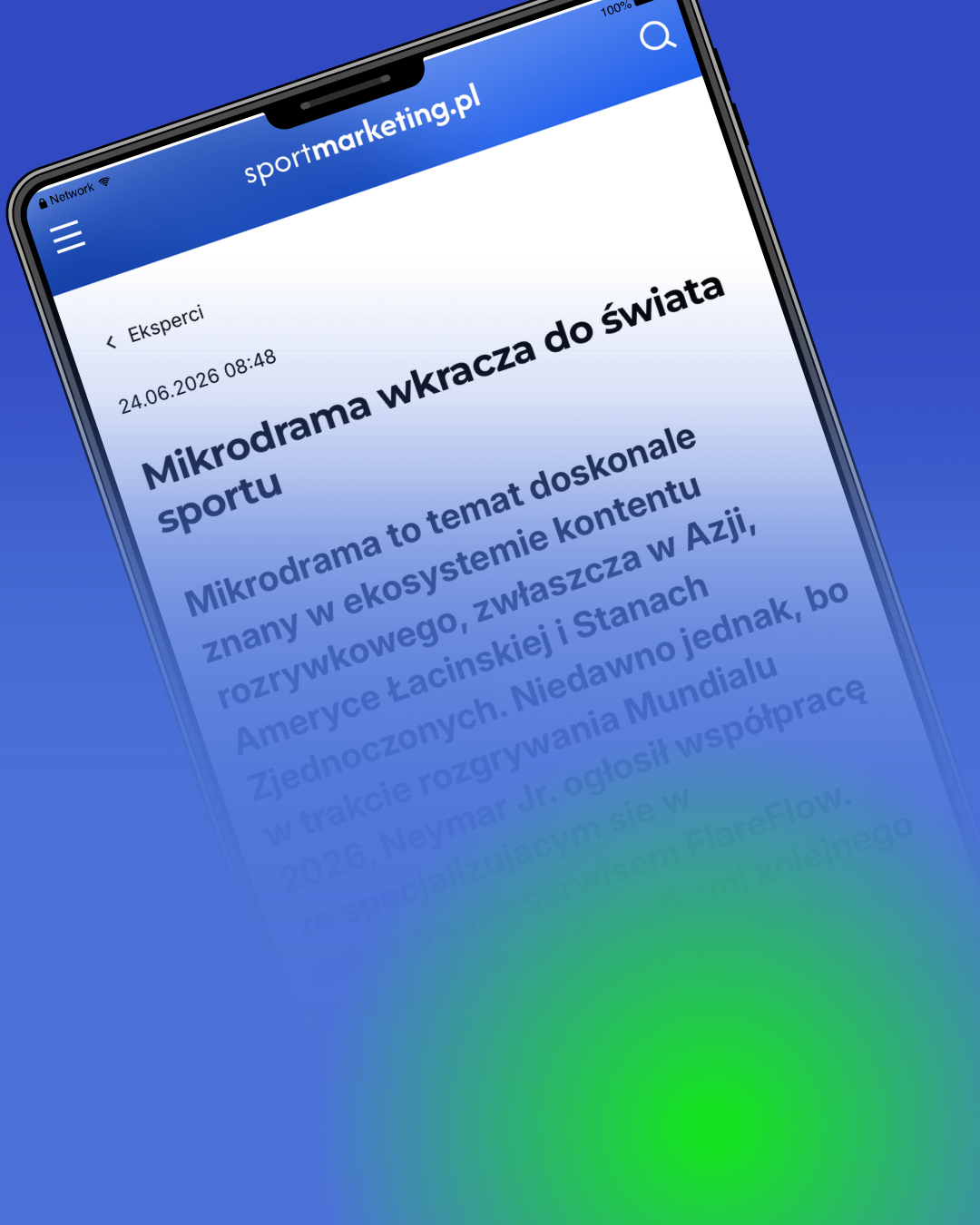
For years, microdrama was viewed as a uniquely Chinese phenomenon. Today, that perception is rapidly changing. As international investment accelerates and major entertainment companies explore new storytelling formats, vertical scripted content is beginning to establish itself as one of the fastest-growing segments of the global media industry.
One of the clearest signals came with the announcement that football superstar Neymar has partnered with FlareFlow, the international microdrama platform developed by COL Group. Launching ahead of the FIFA World Cup, the collaboration demonstrates that microdrama is no longer confined to entertainment alone—it is increasingly intersecting with sport, creator economy, artificial intelligence and brand marketing.

The move reflects a broader industry shift. Mobile-first audiences expect premium entertainment designed specifically for smartphones rather than adapted from traditional television. Microdramas answer that demand with professionally produced, vertically filmed series delivered in episodes often lasting just one or two minutes.
The commercial opportunity is becoming increasingly difficult to ignore. According to Omdia, the global microdrama market is expected to reach approximately $14 billion, with around $4 billion generated outside China. At the same time, audience adoption continues to accelerate across Europe, including Poland, where mobile viewing of dedicated microdrama platforms is approaching the levels achieved by established streaming services on smartphones.
What makes Neymar’s involvement particularly significant is that it demonstrates how the format is expanding beyond scripted entertainment. Sports personalities, creators and global brands are beginning to view microdrama as a new way to reach highly engaged mobile audiences through original storytelling rather than traditional advertising.
This was one of the key themes discussed during the MediaSpurs panel at New Europe Market (NEM) in Dubrovnik, where executives from across the international media industry debated whether microdrama represents a temporary trend or the next major content category. Increasingly, the evidence suggests the latter.
For broadcasters, streaming platforms, telecom operators, advertisers and content owners, the question is no longer whether microdrama will become part of the media ecosystem. The real question is how quickly organisations can adapt their content strategies, distribution models and commercial partnerships to take advantage of this emerging opportunity.
At MediaSpurs, we continue to monitor the evolution of microdrama, creator economy and AI-powered content production, helping international media companies understand where the market is heading and how these new formats can create sustainable commercial growth.
